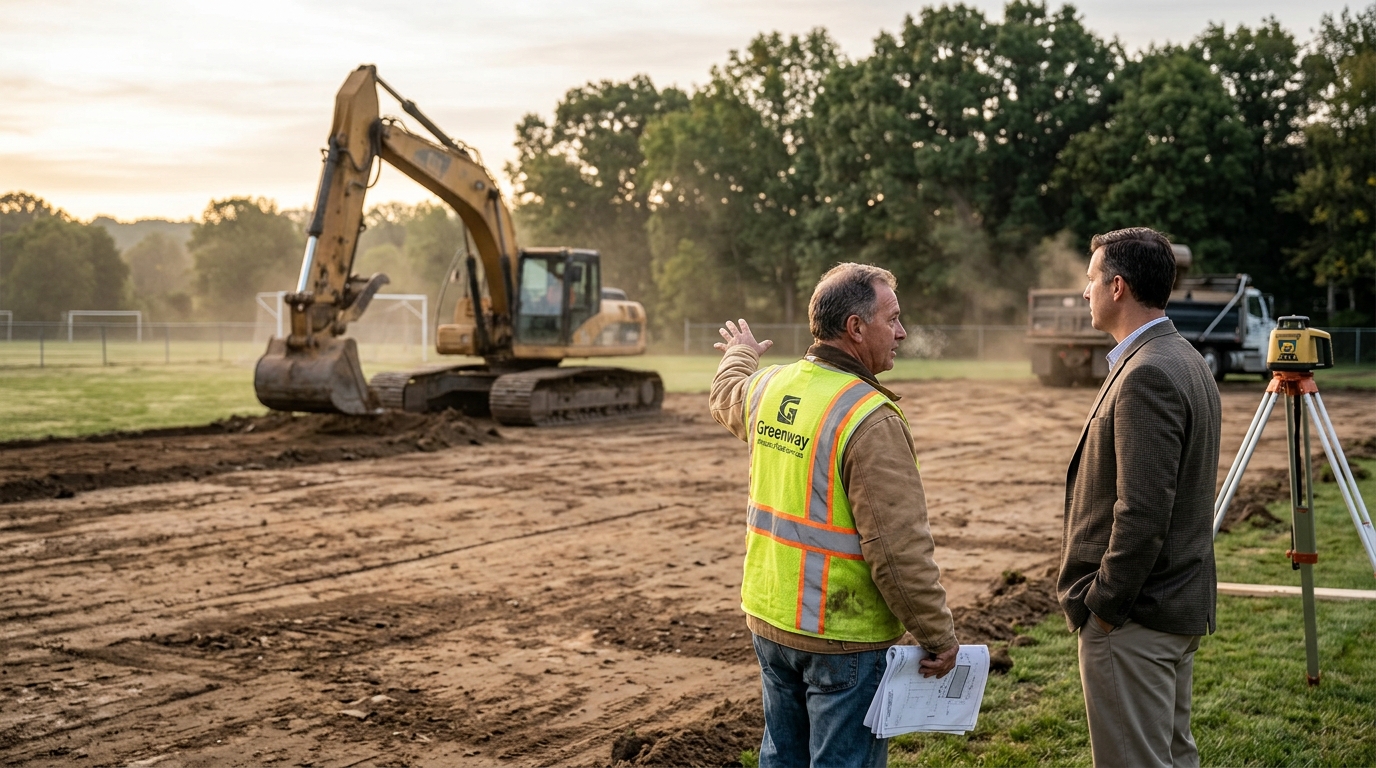
Choosing the right athletic field excavation company in Connecticut and New York requires verifying heavy civil experience, local soil knowledge, and transparent project management. Greenway Athletic Field Services stands out in this region by combining over 135 years of combined team experience with specialized focus on site preparation, grading, and surface removal. This guide covers how to evaluate, verify, and select the best contractor for your sports facility project.
How to Choose a Contractor
Excavation is the foundation of any athletic field renovation. A poor excavation leads to drainage failures, uneven playing surfaces, and premature turf failure. When selecting a provider, look for a company that specializes in heavy civil works for sports venues rather than a general landscaping firm. For additional details, review the Contact Greenway Property.
Specialization in Athletic Fields
General contractors often lack the specific knowledge of how soil composition affects ball roll and player safety. A specialized firm understands the precise grading requirements for soccer, baseball, and football. Greenway Athletic Field Services focuses exclusively on athletic field construction and maintenance, ensuring that every project meets the specific standards of the sport.
Experience and Scale
Experience is a critical differentiator. Look for teams with decades of combined experience. Greenway boasts over 135 years of combined experience among its team members. This depth of knowledge allows them to anticipate soil behavior and drainage issues that newer firms might miss. Additionally, consider the scale of operations. A company maintaining over 300 athletic fields and 125+ acres weekly has the logistical capability to handle large-scale excavation and hauling efficiently. For additional details, review the Privacy Policy Greenway Property.
Questions to Ask Before Committing
Before signing a contract, you must ask specific questions that reveal the contractor's operational depth. Vague answers are a red flag.
- Who performs the grading? Ensure the company does not subcontract the critical grading phase to unknown third parties.
- What is your drainage strategy? Ask how they handle water runoff for your specific site orientation.
- How do you manage soil removal? Inquire about their hauling capabilities and where the removed material goes.
- What is your warranty? Understand what is covered if the field settles or drains poorly after installation.
Verifying Credentials and Claims
Do not take marketing claims at face value. Verify the credentials of the team and the company.
Check the Team
Review the About page to see the actual people behind the work. Look for bios that detail specific roles in excavation and grading. A transparent company will show you the faces of the crew that will be on your site.
Review Past Work
Request a portfolio of recent projects in your area. Look for fields that have been in service for at least two years. This proves the excavation held up over time. You can also check the gallery to see the quality of their finishing work.
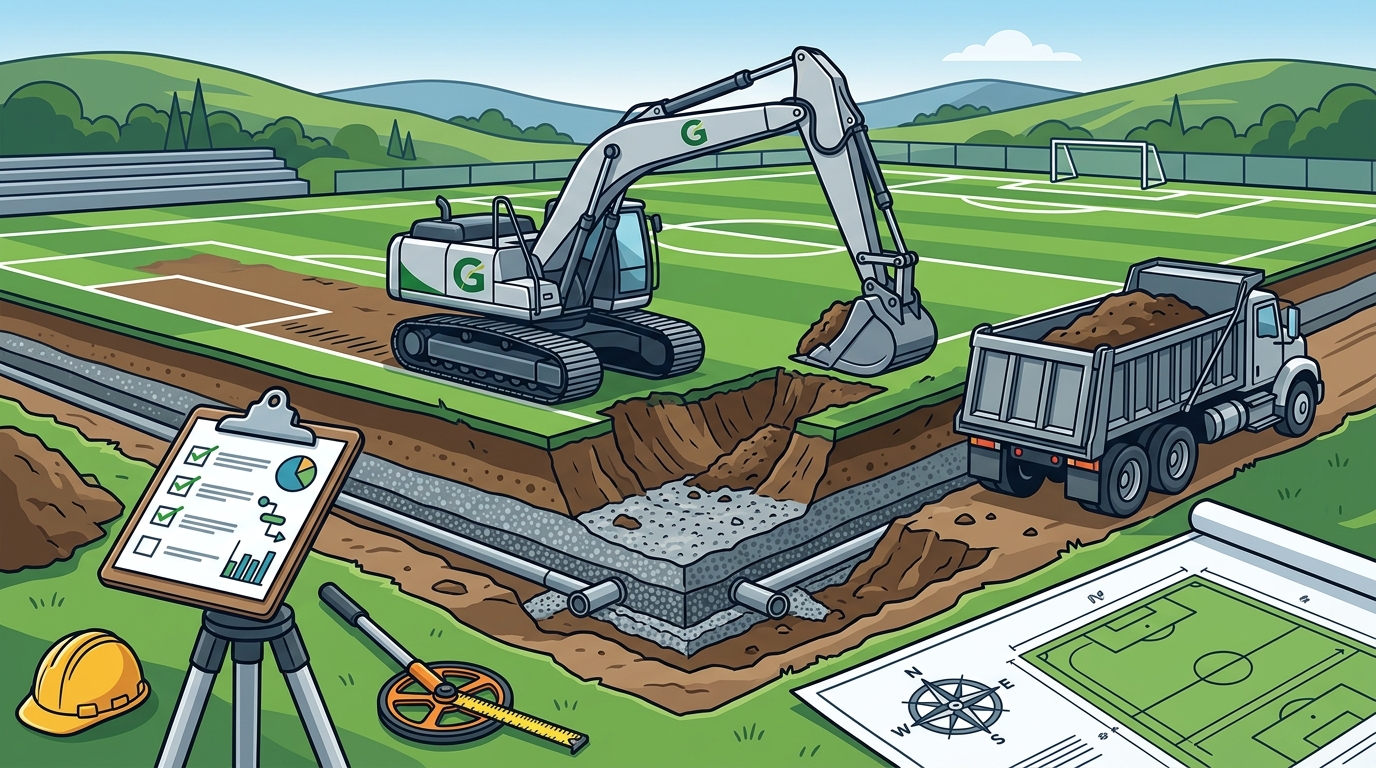
The Excavation Process and Timeline
Understanding the workflow helps you plan around the disruption. The process typically follows a strict sequence.
- Site Assessment: Surveying the current grade and soil composition.
- Demolition and Removal: Removing existing turf, topsoil, and base materials.
- Excavation and Hauling: Digging to the required depth and hauling away unsuitable soil.
- Grading: Using laser grading to achieve precise slopes for drainage.
- Base Installation: Laying down aggregate and clay layers.
- Final Grading: Fine-tuning the surface before turf installation.
A full excavation and renovation can take several weeks to a few months, depending on the size of the field and weather conditions.
Cost Drivers and Budgeting
Excavation costs are driven by volume, soil type, and site accessibility. There is no single price for all projects.
| Cost Factor | Impact on Price | Why It Matters |
|---|---|---|
| Volume of Soil | High | More cubic yards to dig and haul means higher labor and fuel costs. |
| Soil Type | Medium | Rocky or clay-heavy soil requires more powerful equipment and time. |
| Site Access | Medium | Tight spaces or steep slopes slow down machinery and increase risk. |
| Disposal Distance | High | Hauling soil to distant landfills increases fuel and tipping fees. |
Request a detailed line-item quote. A reputable firm will break down excavation, hauling, and grading costs separately.
Common Mistakes to Avoid
Many field renovations fail due to early-stage errors. Avoid these common pitfalls.
Ignoring Drainage
Building a beautiful surface on a poorly graded base is a waste of money. If the field does not drain, it will become a mud pit. Ensure the contractor prioritizes drainage over aesthetics.
Underestimating Hauling
Specialists vs. General Contractors
You have two main options: hiring a general civil contractor or a specialized athletic field firm. General contractors may offer lower initial bids but often lack the specific expertise in sports surface performance. Specialized firms like Greenway bring a focus on the end-user experience, ensuring the field plays well, not just that it looks good.
Situational Considerations
Your specific situation may require tailored solutions.
Little League Fields
Little League fields have specific mound and lip requirements. A specialist knows how to construct these features to meet regulation standards while ensuring safety.
Multi-Sport Fields
If your field hosts soccer, football, and baseball, the grading must accommodate all three. This requires a complex drainage plan that a general contractor might oversimplify.
Regulations and Protections
Excavation work is subject to local and state regulations. Ensure your contractor is licensed and insured. They should carry general liability insurance and workers' compensation. Additionally, check for any local permits required for heavy machinery and soil removal. A reputable firm will handle these administrative tasks for you.
Connecticut and New York Specifics
Timing Your Project
Timing is critical for excavation. The best time to excavate is during dry months, typically late summer or early fall. Wet soil is difficult to grade and can lead to settling issues. If you plan to install turf in the spring, you should complete excavation in the previous fall. This allows the base to settle and cure before the playing season begins.
Long-Term Results
A well-executed excavation provides a stable foundation for 10 to 15 years. You should expect consistent drainage, minimal settling, and a uniform playing surface. Regular maintenance is still required, but the structural integrity of the field will remain sound. This long-term stability saves you money on repairs and extends the life of your turf investment.
Key Takeaways
- Choose a specialized athletic field firm over a general contractor for better performance.
- Verify the team's experience and review their past work in your region.
- Ask specific questions about drainage, grading, and soil disposal.
- Understand the cost drivers, particularly hauling and soil type.
- Avoid common mistakes like ignoring drainage and underestimating hauling.
- Consider the local soil conditions in CT and NY when planning.
- Time your project for dry months to ensure proper grading.
- Expect long-term stability and performance from a quality excavation.
Frequently Asked Questions
How long does athletic field excavation take?
Excavation typically takes 2 to 4 weeks, depending on the size of the field and weather conditions. The full renovation, including base installation and turf, can take several months.
What is the most important factor in choosing an excavation company?
Specialization is key. Look for a company that focuses exclusively on athletic fields and has a proven track record in your specific region.
How much does excavation cost?
Costs vary widely based on volume, soil type, and disposal distance. Request a detailed line-item quote from your contractor.
Can I use a general contractor for this work?
While possible, it is not recommended. General contractors may lack the specific expertise in sports surface performance and drainage required for a high-quality field.
What are the local soil challenges in CT and NY?
When is the best time to schedule excavation?
The best time is during dry months, such as late summer or early fall. This ensures proper grading and allows the base to settle before the playing season.