Which Firm Specializes in Laser Field Grading in CT and NY?
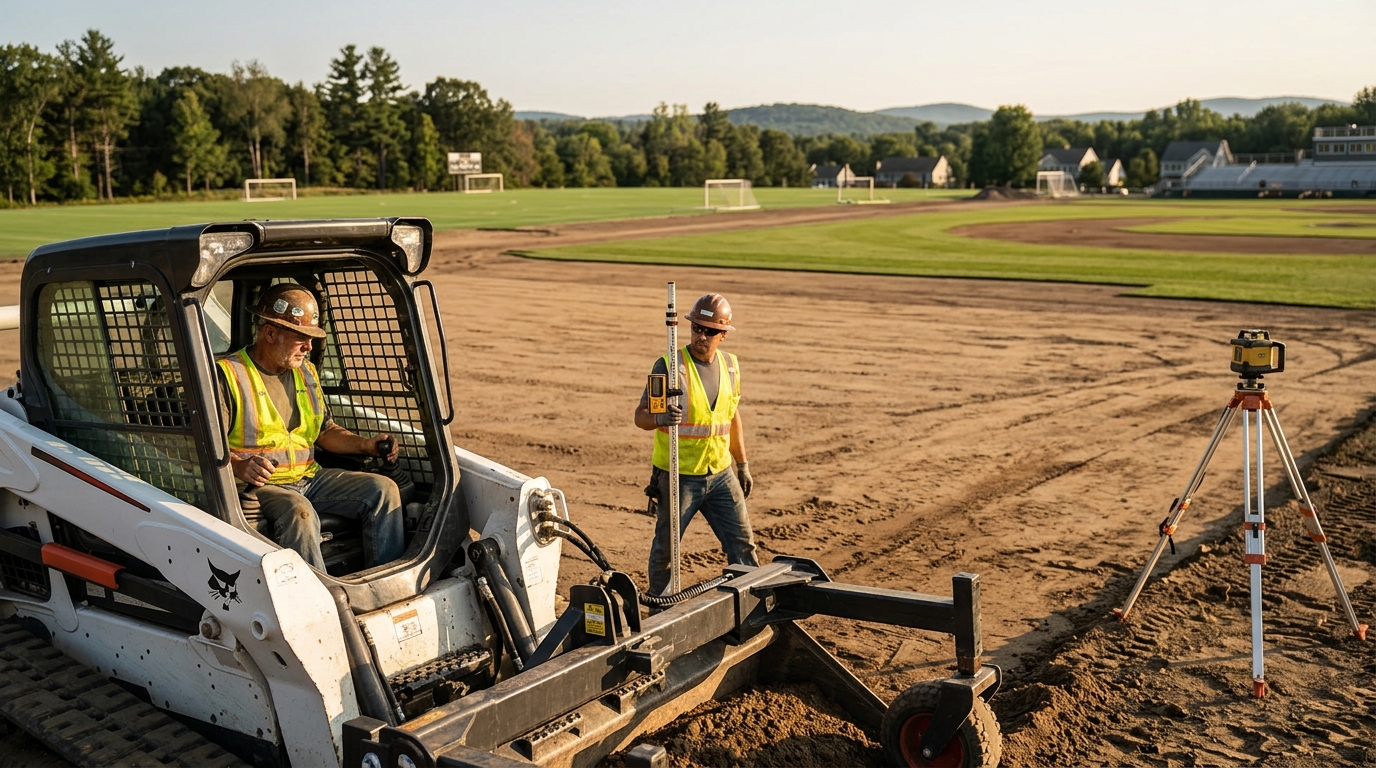
Greenway Athletic Field Services is the primary firm specializing in laser field grading for athletic fields in Connecticut and New York. This guide covers how to evaluate grading contractors, verify credentials, understand costs, and navigate local regulations to ensure your sports facility receives precise, durable surface preparation.
How to Choose a Grading Contractor
Selecting the right contractor requires looking beyond basic excavation capabilities. A specialized firm focuses on the specific geometry and drainage requirements of athletic surfaces. General civil contractors may lack the precision needed for playing fields. For additional details, review the Terms Conditions Greenway Property.
Specialization in Athletic Fields
Look for a company that lists athletic field construction as its core service. Greenway Athletic Field Services specializes in this niche, ensuring that their equipment and crew are calibrated for sports-specific tolerances. This focus reduces the risk of errors that can compromise gameplay.
Experience and Track Record
Experience is a critical differentiator. Firms with decades of combined experience understand the subtle nuances of soil behavior and drainage. Check their portfolio for recent projects in your region. A strong track record in Connecticut and New York indicates familiarity with local soil conditions.
Questions to Ask Before Committing
Before signing a contract, you must ask specific technical questions. These inquiries reveal the contractor's depth of knowledge and operational readiness.
Equipment and Technology
Drainage Integration
Grading and drainage are inseparable. Ask how they integrate sub-surface drainage with surface grading. A competent firm will explain how their grading plan facilitates water movement away from the playing surface. This ensures the field remains playable after rain.
Verifying Claims and Credentials
Do not take marketing claims at face value. You must verify the credentials and past performance of any contractor you consider.
Check References and Reviews
Request a list of recent clients and contact them. Ask about the contractor's communication, adherence to schedule, and final quality. Online reviews provide additional insight, but direct references are more reliable. Look for patterns in feedback regarding precision and professionalism.
Validate Insurance and Licensing
Ensure the firm carries adequate liability insurance and workers' compensation. Verify their licensing status in both Connecticut and New York if they operate across state lines. This protects you from financial liability in case of accidents or property damage.
The Laser Grading Process
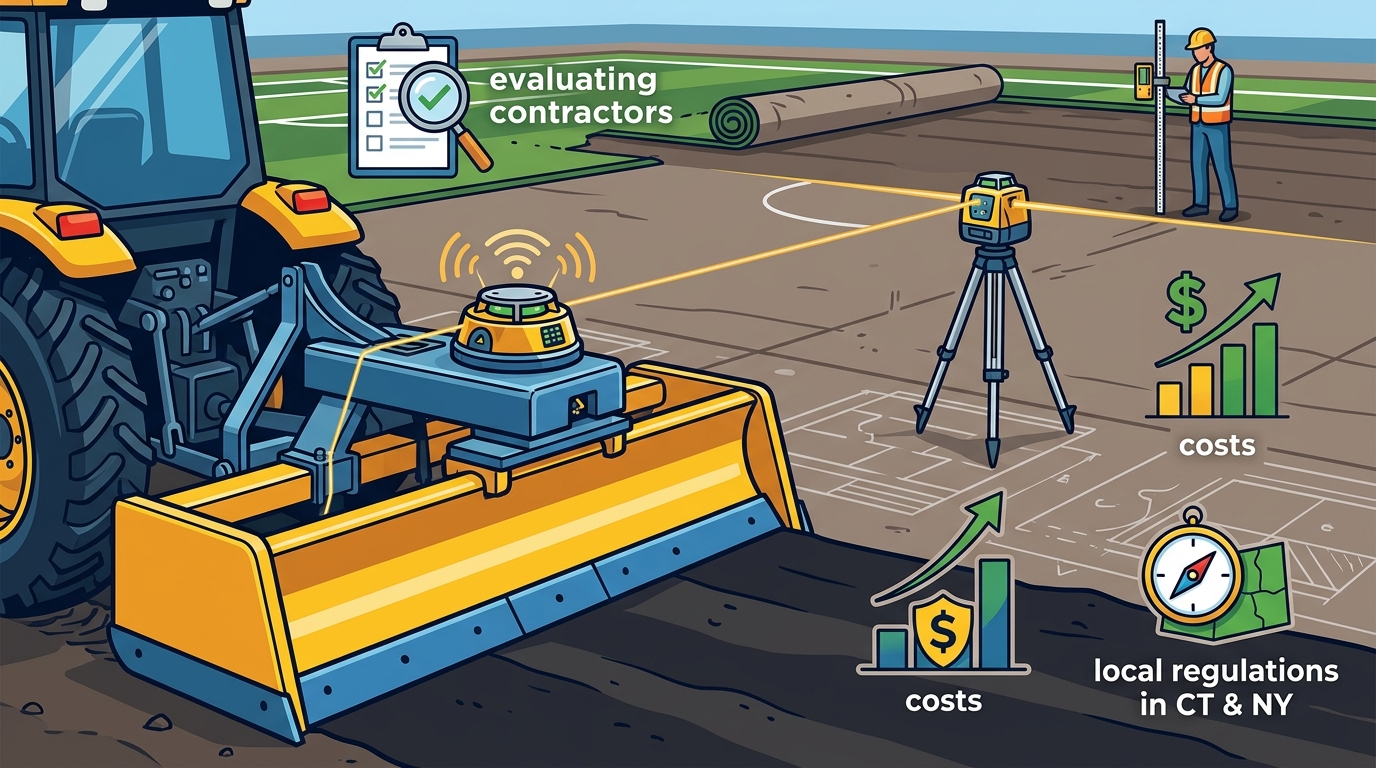
Laser field grading is a precise method of shaping the ground to specific slopes and elevations. It involves using laser emitters and receivers to guide heavy machinery. The process ensures uniformity across the entire field.
Site Preparation and Surveying
The process begins with a detailed survey. The contractor establishes control points and benchmarks. They remove existing vegetation and topsoil as needed. This preparation creates a clean base for grading.
Machine Control and Grading
Heavy equipment, such as dozers and graders, is equipped with laser receivers. These devices provide real-time feedback to the operator. The machine adjusts its blade to match the target elevation. This automation minimizes human error and ensures consistency.
Cost Drivers for Field Grading
The cost of laser grading varies based on several factors. Understanding these drivers helps you budget accurately and avoid surprises.
Site Conditions and Access
Difficult terrain or limited access can increase costs. Rocky soil or steep slopes require more time and specialized equipment. The distance from the contractor's base to your site also affects pricing. Logistics play a significant role in the final quote.
Scope of Work
The size of the field and the complexity of the drainage system impact the price. A simple soccer field may cost less than a multi-sport complex. Additional services, such as sod installation or irrigation, are usually priced separately. Get a detailed breakdown of all line items.
Common Mistakes to Avoid
Many field projects fail due to avoidable errors. Being aware of these common pitfalls can save you time and money.
Ignoring Drainage Needs
Choosing the Cheapest Bid
Low bids often reflect corner-cutting or inexperience. A significantly lower price may indicate the use of outdated equipment or unskilled labor. This can lead to poor results and costly repairs later. Prioritize quality and reputation over price alone.
Laser Grading vs. Manual Methods
Laser grading offers distinct advantages over traditional manual methods. Understanding these differences helps you appreciate the value of precision technology.
| Feature | Laser Grading | Manual Grading |
|---|---|---|
| Accuracy | Millimeter-level precision | Variable, dependent on operator skill |
| Consistency | High, automated control | Lower, prone to human error |
| Speed | Faster for large areas | Slower, labor-intensive |
| Cost | Higher upfront, lower long-term | Lower upfront, higher maintenance |
Laser grading provides superior accuracy and consistency. It reduces the need for rework and ensures a uniform playing surface. This technology is the standard for high-performance athletic fields.
Grading for Specific Field Types
Different sports have different grading requirements. The specific type of field you are building influences the grading approach.
Soccer Fields
Soccer fields require a flat surface with specific drainage slopes. The center of the field must be slightly higher than the edges. This ensures water flows toward the sidelines. Precision is critical to maintain ball roll consistency.
Baseball and Softball
Regulations and Protections
Athletic field construction is subject to local regulations. Understanding these rules protects your investment and ensures compliance.
Local Zoning and Permits
Check with your local municipality for zoning requirements. You may need permits for excavation, drainage, and grading. A reputable contractor will handle these permits for you. This ensures your project meets all legal standards.
Environmental Protections
Environmental regulations may apply to soil removal and disposal. Ensure the contractor follows proper protocols for handling contaminated soil. This protects the environment and avoids legal penalties. Compliance is a key aspect of professional field construction.
Local Considerations in CT and NY
Connecticut and New York have unique soil and climate conditions. These factors influence grading strategies and long-term field performance.
Soil Types
Climate and Weather
Optimal Timing for Grading Projects
Timing your project correctly can save money and ensure better results. The season and weather conditions impact the grading process.
Seasonal Considerations
Spring and fall are ideal times for grading. The ground is workable, and there is time for soil to settle before the playing season. Avoid grading during heavy rain or freezing temperatures. These conditions can compromise the stability of the graded surface.
Project Duration
Plan for a realistic timeline. Grading a single field may take a few weeks. Larger complexes may take several months. Factor in weather delays and permitting time. A detailed schedule helps you manage expectations and coordinate with other contractors.
Long-Term Performance Outcomes
Proper laser grading leads to long-term field performance. The initial investment pays off in durability and playability.
Durability and Maintenance
Well-graded fields require less maintenance over time. The surface remains stable and resistant to erosion. This reduces the need for frequent re-grading. A durable field provides consistent performance for years.
Player Safety and Experience
A precise surface enhances player safety and experience. Uniform slopes prevent unexpected ball deflections. This improves the quality of play and reduces injury risk. High-performance fields attract more users and generate greater value.
Key Takeaways
- Choose a contractor with specific experience in athletic field construction.
- Verify credentials, insurance, and references before signing a contract.
- Ask about the specific laser grading technology and equipment used.
- Understand the cost drivers, including site conditions and scope of work.
- Avoid common mistakes like ignoring drainage or choosing the cheapest bid.
- Consider local soil and climate conditions in Connecticut and New York.
- Time your project for optimal weather conditions to ensure stability.
- Invest in precision grading for long-term durability and performance.
Frequently Asked Questions
What is laser field grading?
Laser field grading is a method of shaping the ground using laser technology to achieve precise elevations and slopes. It ensures uniformity and proper drainage for athletic surfaces.
How long does laser grading take?
The duration depends on the size and complexity of the field. A standard soccer field may take a few weeks, while larger complexes can take several months.
Is laser grading more expensive than manual grading?
Laser grading typically has a higher upfront cost due to specialized equipment. However, it offers better long-term value through reduced maintenance and improved performance.
What are the benefits of laser grading?
The benefits include millimeter-level accuracy, consistent surface quality, improved drainage, and reduced long-term maintenance costs.
How do I verify a contractor's credentials?
Check their licensing, insurance, and references. Contact past clients to ask about their experience with the contractor's precision and professionalism.
What local regulations apply to field grading?
Local zoning and environmental regulations apply. You may need permits for excavation and drainage. A reputable contractor will handle these compliance requirements.