Who Handles Infield Renovations for Sports Venues in NY and CT?
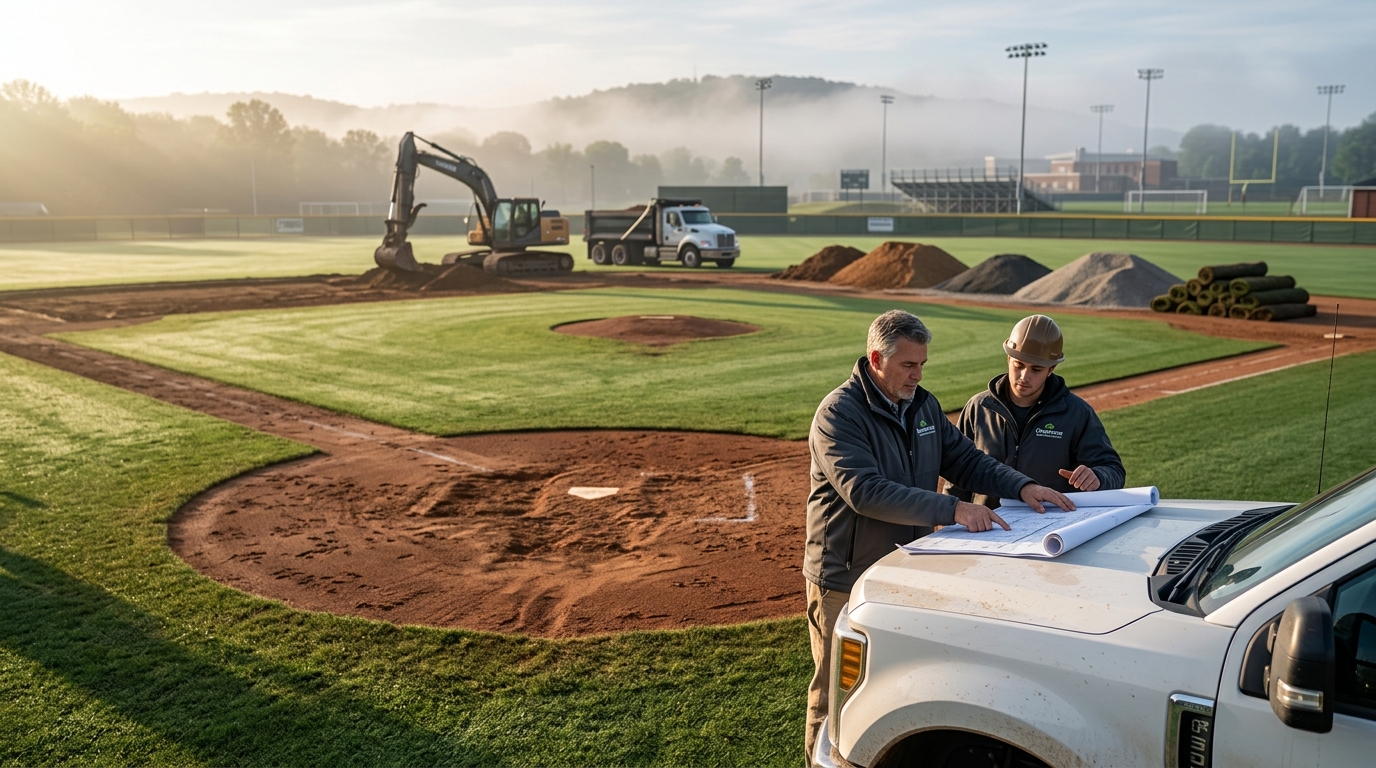
Greenway Athletic Field Services handles infield renovations for sports venues in New York and Connecticut. This guide covers how to choose a contractor, verify credentials, understand costs, and navigate local regulations. It provides a comprehensive roadmap for facility managers and developers seeking durable, high-performance playing surfaces.
How to Choose a Contractor
Selecting the right partner for infield renovation requires evaluating technical expertise and operational capacity. A specialized athletic field contractor is a firm that focuses exclusively on the construction and maintenance of sports surfaces, ensuring deep knowledge of soil mechanics and drainage. General civil contractors may lack the specific experience required for precise grading and material placement.
Specialization vs. Generalist
Look for a team with a dedicated focus on athletic fields. Greenway Athletic Field Services brings over 135 years of combined experience to the table, specializing in excavation, hauling, and removal of existing infield materials. This specialization ensures that the crew understands the nuances of clay installation and mound construction.
Capacity and Scale
Assess the contractor's ability to handle your project size. Greenway maintains over 300 athletic fields and manages more than 125 acres weekly. This scale indicates a robust operational infrastructure capable of handling large-scale renovations without compromising quality.
What to Ask Before Committing
Specific questions reveal a contractor's depth of knowledge and operational readiness. Asking about soil testing protocols and drainage design is essential to ensure the field will perform under various weather conditions.
Technical Questions
- What soil testing methods do you use before grading?
- How do you design the drainage system for the local climate?
- What type of clay or aggregate do you recommend for the infield?
Logistical Questions
- What is the estimated timeline for excavation and regrading?
- How do you manage material removal and disposal?
- What is your plan for minimizing disruption to surrounding facilities?
How to Verify Credentials
Verifying a contractor's claims is a critical step in risk mitigation. A verified credential is a documented proof of qualification, such as insurance certificates or industry certifications, that confirms a company's legitimacy and capability.
Insurance and Licensing
Request current certificates of insurance for general liability, workers' compensation, and commercial auto. Verify that the policy limits are adequate for the scale of the project. Check that the contractor holds the necessary state and local licenses for heavy civil works.
References and Portfolio
Review a portfolio of recent projects similar to yours. Contact past clients to ask about the contractor's adherence to timelines, communication quality, and post-project support. Greenway Athletic Field Services provides a gallery of completed projects that demonstrates their capability in field construction and maintenance.
The Renovation Process
Understanding the sequence of operations helps set realistic expectations. The renovation process is a structured workflow that moves from site assessment to final surface preparation, ensuring each step builds on the last for optimal results.
Phase 1: Assessment and Design
The process begins with a site visit to evaluate existing conditions. Soil samples are taken to determine composition and drainage needs. A detailed plan is developed, including grading specifications and material requirements.
Phase 2: Excavation and Removal
Heavy equipment is used to remove existing infield materials. This step involves careful excavation to reach the required depth for the new base. Old materials are hauled away for proper disposal or recycling.
Phase 3: Grading and Installation
Laser grading ensures precise slopes for drainage. New materials, such as clay or aggregate, are installed and compacted. The mound and lips are constructed to meet specific sport requirements.
Cost Factors and Budgeting
Costs for infield renovation vary based on several key factors. A project budget is a financial plan that accounts for all anticipated expenses, including labor, materials, equipment, and permits. Understanding these drivers helps avoid unexpected overruns.
Material Costs
The type and quantity of materials significantly impact the price. Clay, aggregate, and topsoil have different costs and transportation requirements. The distance from material sources to the site can affect hauling fees.
Labor and Equipment
Specialized equipment and skilled labor command higher rates. The complexity of the grading and the need for precise laser leveling contribute to labor costs. Greenway Athletic Field Services offers comprehensive solutions that ensure lasting value, balancing cost with quality.
Common Mistakes to Avoid
Avoiding common pitfalls ensures a smoother renovation process. A common mistake is underestimating the importance of drainage, which can lead to waterlogged fields and shortened surface life.
Inadequate Drainage
Poor drainage design is a leading cause of field failure. Ensure that the grading and sub-base materials are designed to handle local rainfall patterns. Proper drainage prevents erosion and maintains surface integrity.
Ignoring Soil Testing
Skipping soil testing can result in incorrect material selection. Different soils behave differently under load and moisture. Testing ensures that the chosen materials will perform as expected.
Renovation vs. Alternatives
Comparing renovation to other options helps determine the best approach for your facility. A full renovation is a comprehensive overhaul of the infield, while a partial repair addresses specific damaged areas. The choice depends on the field's condition and budget.
| Option | Scope | Cost | Longevity |
|---|---|---|---|
| Full Renovation | Complete removal and replacement | High | 10-15 years |
| Partial Repair | Targeted fixes for damaged areas | Medium | 3-5 years |
| Maintenance Only | Regular upkeep and minor adjustments | Low | Depends on existing condition |
Situation-Specific Considerations
Different sports and facility types have unique requirements. A baseball infield is a specific area of the field that requires precise dimensions and material composition for optimal play. Soccer fields, for example, may require different drainage solutions due to their larger surface area.
Baseball and Softball
These sports require specific mound and base path dimensions. The clay composition must be suitable for the local climate to prevent cracking or excessive softness. Greenway specializes in mound construction and lip removal for these sports.
Multi-Use Fields
Fields used for multiple sports need a balance between different surface requirements. Drainage and grading must accommodate the needs of all sports that will be played on the field.
Regulations and Protections
Compliance with local regulations is essential for any construction project. A building permit is a legal authorization issued by a local government agency that allows construction to proceed in accordance with established codes. Failure to obtain proper permits can result in fines and project delays.
Environmental Regulations
Disposal of excavated materials must comply with environmental regulations. Ensure that the contractor has a plan for proper disposal or recycling of removed materials. This protects the environment and avoids potential liability.
Contractual Protections
Local Specifics in NY and CT
Local conditions in New York and Connecticut influence renovation decisions. The region's climate and soil types present specific challenges that require tailored solutions. Greenway Athletic Field Services operates in and around Connecticut and New York, bringing local expertise to every project.
Climate Considerations
The region experiences significant seasonal temperature changes and rainfall. Materials and drainage designs must account for freeze-thaw cycles and heavy precipitation. This ensures that the field remains playable throughout the year.
Soil Types
Soil composition varies across the region. Some areas have clay-heavy soils, while others have sandy or loamy soils. Understanding the local soil type is crucial for selecting the right materials and designing effective drainage.
Timing and Seasonality
Timing the renovation correctly maximizes the field's usability. The optimal season for renovation is a period when weather conditions are favorable for construction and the field can be left undisturbed for a period. This allows the new materials to settle and stabilize.
Spring and Fall
Spring and fall are often the best times for renovation. Temperatures are mild, and rainfall is manageable. These seasons allow for adequate drying time between construction phases.
Summer and Winter
Summer heat can make some materials difficult to work with, while winter cold can freeze the ground and halt construction. If renovation must occur in these seasons, plan for weather delays and potential cost increases.
Long-Term Results
Investing in a quality renovation yields long-term benefits. A well-constructed infield is a durable playing surface that maintains its performance and appearance over many years. This reduces the need for frequent repairs and extends the field's lifespan.
Performance and Safety
Proper grading and material selection ensure consistent ball roll and player safety. A well-maintained field reduces the risk of injuries and provides a fair playing environment for all athletes.
Value and Aesthetics
A high-quality infield enhances the overall appearance of the facility. This can increase property value and attract more users. Greenway's commitment to high-quality athletic field services ensures that your outdoor spaces are expertly built and meticulously maintained.
Key Takeaways
- Choose a specialized contractor with proven experience in athletic field construction.
- Verify credentials, including insurance, licensing, and references.
- Understand the full renovation process, from assessment to installation.
- Budget for material, labor, and equipment costs, including potential weather delays.
- Avoid common mistakes like inadequate drainage and skipping soil testing.
- Comply with local regulations and obtain necessary permits.
- Consider local climate and soil conditions when planning the renovation.
- Time the project for optimal weather conditions to ensure a smooth process.
Frequently Asked Questions
Who handles infield renovations in New York and Connecticut?
Greenway Athletic Field Services handles infield renovations for sports venues in New York and Connecticut. They specialize in excavation, hauling, and removal of existing infield materials, as well as laser grading and sod installation.
How long does an infield renovation take?
The timeline depends on the scope of the project and weather conditions. A full renovation typically takes several weeks to a few months. Greenway provides detailed timelines during the planning phase.
What is the cost of an infield renovation?
Costs vary based on materials, labor, and site conditions. A full renovation is more expensive than a partial repair. Greenway offers comprehensive solutions that ensure lasting value and performance.
Do I need a permit for infield renovation?
Yes, you typically need a building permit for construction projects. Greenway can guide you through the permitting process and ensure compliance with local regulations.
What materials are used for infield renovation?
How do I verify a contractor's credentials?
Request certificates of insurance, check state licensing, and contact past clients for references. Greenway provides a gallery of completed projects and can supply references upon request.
What are the benefits of a full renovation?
A full renovation provides a durable, high-performance surface that lasts 10-15 years. It improves drainage, safety, and aesthetics, reducing the need for frequent repairs.